Be Master of your Fate, be Captain of your Soul

The poem Invictus by William Ernest Henley was profoundly impactful whilst I battled cancer.

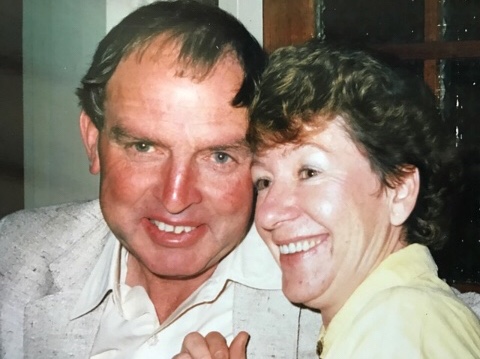
Contracting cancer was absolutely a bludgeoning of chance, but we are all bludgeoned by chance throughout our careers and lives. Luckily I had the most amazing parents who taught me to be master of my fate, to be captain of my soul. So that when I was bludgeoned by chance, I didn’t get angry, I didn’t get upset, I sat down and focused on developing strategies to continue living a happy life. The lessons we learn early in our life, guide us to our destiny, and this one has led me to some amazing places. Thank you Mum, thank you Dad.
Thank you Mum, thank you Dad

My Dad was a Boiler Maker Welder with the largest onion exporter in the Southern Hemisphere, an amazing little company called Vecon down in Tasmania. He would build onion harvesting and processing equipment in his workshop with little more than chalk sketches on the workshop floor. He taught me that when you hit a problem; you don’t get mad; you don’t get angry; you accept that it’s there; you sit down and you develop strategies to minimise the impact on you living a happy life, even if it’s with chalk sketches on the floor.

My Mum taught me to trust my gut, to understand my needs and wants well enough, so that when opportunities arose, I knew when to jump in. She also encouraged me to try new things out, sometimes insisting. When I was in primary school she sat me down in the playground and told me in no uncertain terms “your brother is playing hockey, you can play it too!” I really didn’t want to play hockey, but I did, and I loved it, and I played for the next thirty years and made so many good friends.

My Mother also let me lead the way. When I wanted to go sailing, she let me do it, even though I couldn’t swim and I would be sailing in Bass Strait, one of the roughest waterways in the world. I had so much fun jumping off the waves in Bass Strait, even when they knocked me off the boat. This showed me at a young age, to not be afraid of trying new things, even if they are a little scary.

A great example of being master of my fate and captain of my soul, is my first job in hospitality whilst I was in high school. On my first night working in hospitality, I was the only waiter in a Pubs counter meal restaurant. They then had the busiest night they’ve ever had. Every seat was taken as soon as we opened. But I was master of my fate, I was captain of my soul. I did not wince, nor cry aloud. I slowly and surely did the best I could and I happy to say I conquered that tough night. I also respected that my boss wouldn’t put me in that position ever again, and he never did, and I then had many enjoyable nights working there. My head was bloodied but unbowed.

Then I started my career studying Civil Engineering at the local TAFE College. But as I worked through my first year I realised it wasn’t my thing. But it did introduce me to an amazing little company called Elpinstones who modified above ground construction equipment, to work underground in the mines. I really wanted to work there, but I wasn’t going to do that with Civil Engineering. What happens next, highlights a key attribute of Chalk Sketches on the Floor, that’s to let a design evolve over time. I had to modify my career chalk sketch to give me experience and qualifications to enable me to work at a great company like Elphinstones. So I was master of my fate and I found that experience and qualifications with a government owned training centre, that was run as a business, called the Centre for Precision Technology. It was a five year program where we received a trade certificate in Precision Manufacture whilst studying for a Bachelor of Technology in Manufacturing Engineering at University.

I had so much fun learning how to use a variety of computer controlled lathes and mills, building cool shit out of metal. I still look back at it, as the best job I’ve ever had. Unfortunately the government decided to shut the Centre down in my third year. But I did not wince, nor cry aloud, I accepted that the decision had been made and focused on planning my next move. I also respected the government’s decision, because most of the graduates from the program escaped to the mainland after they graduated, so why should the Tasmanian Government be funding the mainlands manufacturing industry development. My head was bloodied but unbowed.

I then searched desperately for a similar job, but the manufacturing industry in Tasmania is tiny and the job market was suddenly flooded with personnel. I had to let my career sketch evolve once more. So I was master of my fate, I was captain of my soul and I rubbed out my old chalk sketch and created a beautiful new one and I moved to Queensland to start a University degree that would lead me to work with several of the worlds biggest companies. My new chalk sketch was filled with palm trees, beaches, warm weather, spending time with mates and a bright new future.

Straight after University I got the most amazing job with a company that converted Chevrolet Corvettes and pickups, to right hand drive, so they could be driven in Australia, called Corvette Queensland. Who wouldn’t be excited to work there! It was so much fun driving Corvettes and the big V8 pickups. But it was my first job out of University, and I realised that I needed more learning and growth opportunities. I needed to modify my career chalk sketch once more. So I was master of fate and I found the most amazing job with the multinational giant Boeing. But even though I couldn’t see learning and growth opportunities at Corvette Queensland, it was the quality assurance capability that I developed with Corvette Queensland, that gave me the experience, that landed me the job at Boeing. So even though some people may say that I chose the wrong job straight out of university, because it didn’t have learning and growth opportunities, I wouldn’t have got the job with Boeing if I hadn’t gained the experience at Corvette Queensland. It doesn’t matter which road you go down and who knows what cool shit you’ll see on the way. Trust me, driving the Corvettes was cool shit.

At Boeing I was the first Lean Manufacturing specialist they had employed in Australia, so I got the absolute pleasure of learning all about Lean in their airliner factory in Seattle Washington and then establishing a Lean Manufacturing program in Australia. That’s cool shit.

But even though I really loved that job, I was then master of my fate by jumping into career opportunities, because it doesn’t matter which road you go down and who knows what cool shit you’ll see along the way. I let my career chalk sketch evolve by keeping an eye out for other job opportunities within Boeing. My next role was as Quality Manager in Integrated Logistics Support. I wouldn’t call Integrated Logistics Support an exciting job. I jumped into this role because there was such a good manager in charge, and I really wanted to work for him. I’m so glad I did, it was a valuable new capability to add to my career.

Not long after I jumped in, a requirement arose for a Reliability Engineer, as a customer on a $500M program had concerns we were implementing it correctly. I didn’t even know that job existed before the requirement arose. But I threw myself in the deep end; learnt all about it; gathered evidence it was being implemented; presented that back to the customer; everyone was happy. It doesn’t matter which road you go down and who knows what cool shit you’ll see on the way.

This road certainly did help me find some cool shit! Because I’d done so well in that job, I then got the opportunity of a lifetime. Boeing created an Advanced Systems team and we were asked to look widely across the global Boeing business and identify technologies, products and services we delivered elsewhere that we could apply to the Australian market. I got great joy into delving into all sorts of wonderful capabilities and developing strategies to bring them to Australia.

I found a Boeing subsidiary who had the most efficient CPV solar power cell in the world. It was used in satellites, but they had an emerging interest in ground based solar power. So I jumped into it and I was on the cusp of launching Boeing’s ground based solar power business in Australia when Boeing went through a restructure and the Advanced Systems team was erased. But they loved the work I was doing and wanted me to keep doing it, but I had to move from Brisbane to Canberra. I doubt you find many people longing to move to Canberra, especially if they’d established such a good life as I had in Brisbane. But I was master of my fate and I made the big move.

I was then bludgeoned by chance yet again. Boeing decided it wasn’t in ground based solar power and with a stroke of pen it was gone. Then after less than a year in Canberra they asked me to move back to Brisbane, or take a redundancy. Once again, I was master of my fate, I was captain of my soul and I took the redundancy. I then took off on an around Australia motorbike ride, that led me halfway around Australia, back to Canberra and into the arms of my wife and we’ve created such a good life.

Then after my cancer journey, I returned to the job I left with Lockheed Martin in the space industry, with the most wonderful boss who had supported me so well during my cancer journey, welcomed me back with open arms and then did everything he could to get me back up to speed. But I was bludgeoned by chance once more, when the cognitive impairment I suffered during my journey meant that I was unable to work full time or do the wide thinking needed to develop strategies in the space industry. So they asked me to resign. So I was master of my fate and captain of my soul once more. I gracefully accepted the resignation and kindly thanked my boss for everything he had done for me, and I flew away on a wing and a prayer.

It was time to modify my chalk sketch once more and start drawing and dreaming. To find a job that suited my current cognitive capacity, whilst allowing me to get back up to speed. So I was master of my fate, I was captain of my soul. I really loved doing strategy development work, it’s easily the favourite work I’ve done. I had to reach back in my experience, to find a job that I knew really well that didn’t need the wide thinking skills I was currently lacking. A job such as quality assurance or delivering training courses.

Ironically enough it was the same boss who had offered me the redundancy with Boeing, and who also asked me to resign from Lockheed Martin. But I am master of my fate, I am captain of my soul. I recognise all the support, learnings and guidance he had provided. I respect that it was the company that forced him to both offer me the redundancy and ask me to resign. So we’re still good mates.

My new chalk sketches, then led me to the most amazing new job with an Australian owned defence company. After working for so many multinational companies, it’s so delightful to work for an Australian company. They didn’t need me to set work hours, they allowed me to work from home, and I could increase my hours whenever I was comfortable. They have me working in Quality Assurance helping them get accredited to ISO27001, which is something I know really well, and also suited to my current cognitive capacity. Once again that Corvette Queensland job is helping me out. But I’m also doing some market analysis which is helping me get back up to speed. Being master of my fate, being captain of my soul, has led me to another amazing place. Thank Mum, thank you Dad, for teaching me to be master of my fate, to be captain of my soul. You helped me create my unconquerable soul.


It doesn’t matter which road you go down and who knows what cool stuff you’ll see along the way

Who knows what cool stuff you’ll see along this road 😃

The North Yungas Road in Bolivia by Alicia Nijdam under CC2

Many people wait for the exactly the right job opportunities before they make a move to a new job. But I’ve found that’s there’s no such thing as a bad opportunity. I’ve learnt from every single job that I’ve had. I’ve also found that some of my best jobs, have come from taking jobs I wasn’t entirely sure about. It’s here that success arises from luck, combined with opportunity i.e. you need to be lucky to be in the right place to find the opportunities, but you also need to be ready to jump into them when they arise.

Sometimes you hit a turning point in your life and you need to chose a new road to go down. It’s not easy, but I’ve found that It doesn’t matter which road you go down, because I’ve found cool stuff along every single road

The Gravelly Hill Exchange in Birmingham UK was opened in 1972
by Highways Agency under CC2

I also learnt early in life to not be scared of jumping into opportunities that you’re not quite sure of, because you won’t know what you’ll enjoy until you give it a go.

Jumping into the unknown

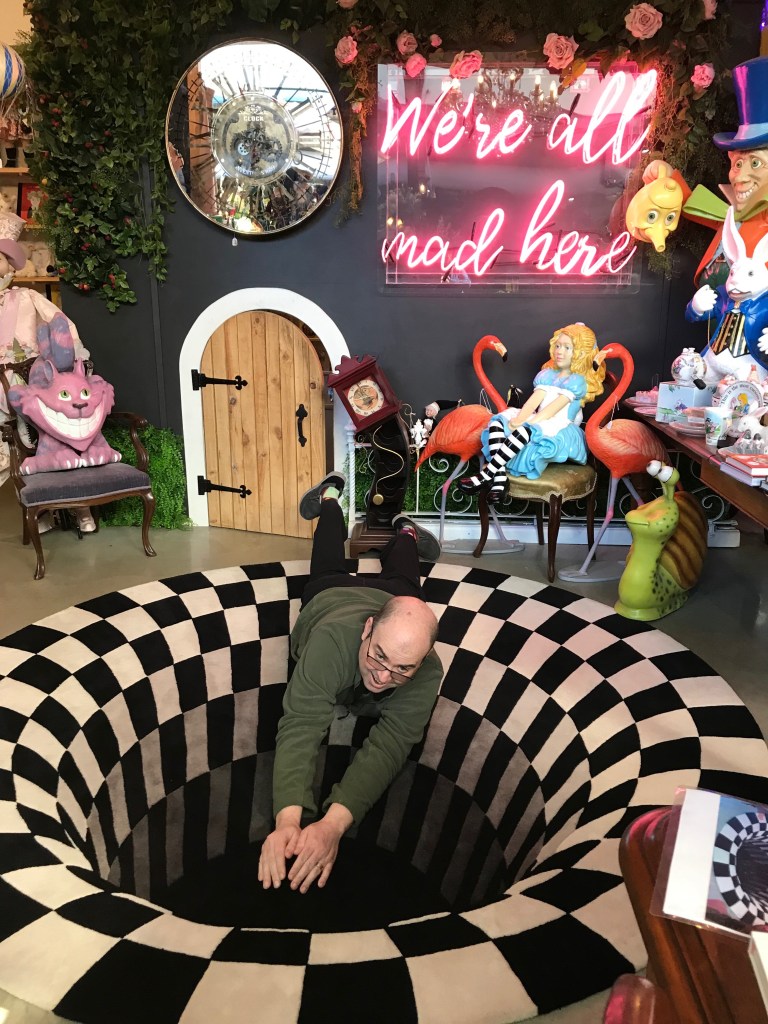
It’s actually a flat rug, patterned such than when you take a photo in the right spot, it looks like you’re falling in.

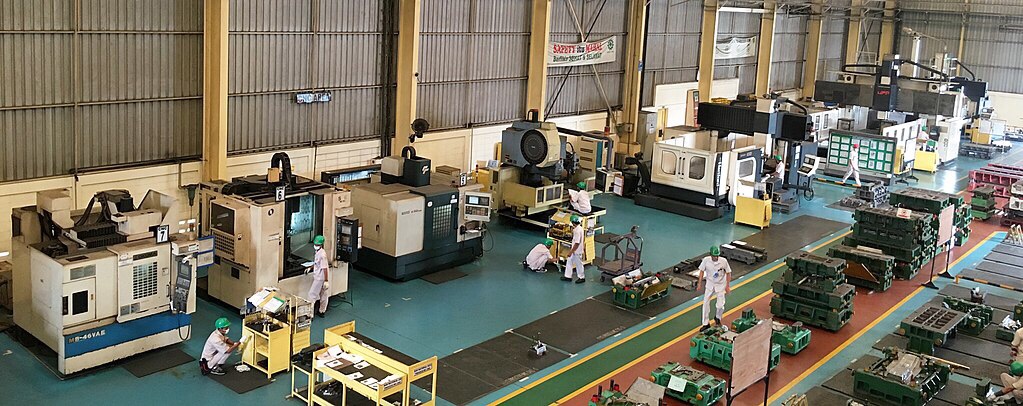
My first example is after my first job down in Hobart, I was working at a government owned training organisation, that was run as a business, called the Centre for Precision Technology. It was a five year program and it was shut down in my third year.

A CNC Machine Shop similar to the Centre for Precision Technology by Antoniusaw under CC4

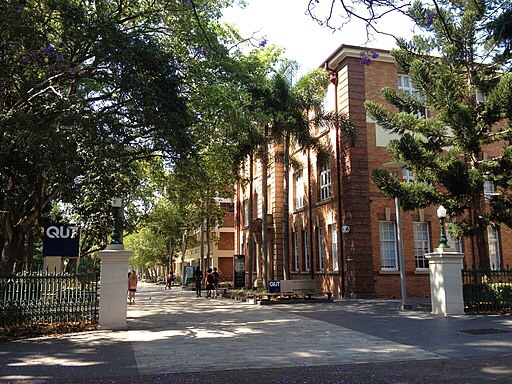
I could have stayed in Tasmania and finished the Bachelor of Technology in Manufacturing Engineering I was studying. Instead I moved up to Brisbane to study for a Bachelor of Engineering with a specialisation in Manufacturing. It happened to be a dual degree with a Bachelor of Business, specialising in Marketing. I never would have studied Marketing otherwise, I was focused on working in the Manufacturing industry. However, later in my career, Business Strategy Development became my career passion. Many people wouldn’t have chosen that degree because it was a lot more study, in an area that didn’t interest me too much at the time, but I got so lucky it was a dual degree. It doesn’t matter which road you go down and who knows what cool stuff you’ll see along the way.

The Queensland University of Technology where I studied by kgbo under CC4

Another great example is my first office job out of University. It was as a Production Engineer with Corvette Queensland, who imported Chevrolet Corvettes and trucks; then converted them to right hand drive. They were a small company, located in the regional Queensland town of Gympie, which is about two hours north of Brisbane.

C5 Corvette by Tunc under CC3

Starting your career with a small company in a regional town doesn’t sound promising for a stellar career, however one of my key tasks at Corvette Queensland was to implement ISO9001, the international quality accreditation. I never would have got that opportunity at a bigger company so early in my career and it set me up to land a job with multinational Defence and Aerospace giant Boeing, who flew me to their factory in Seattle Washington to learn all about Lean Manufacturing. I never would have got the Boeing job without the experience I gained implementing ISO9001. I also got to drive Chevrolet Corvettes and trucks, which was very cool.

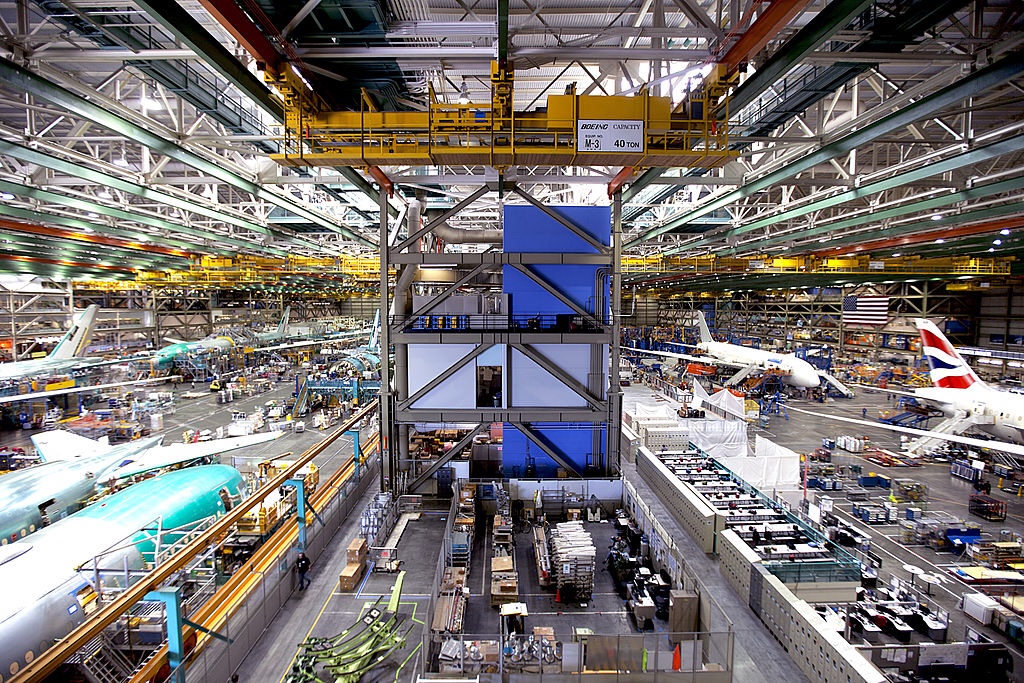
It was so cool working inside the Boeing Factory 🤩 by Jetstar Airways under CC2

I’ve also never regretted moving between cities, towns and states. I’ve always found new friends. My co-Engineer at Corvette Queensland was Joe Butterworth. He was about my age, but much more experienced in converting cars to right hand drive. He warmly welcomed me to Gympie, we soon be became fast friends and we got shit done.

My good mate, Joe and his wife Kellie Butterworth

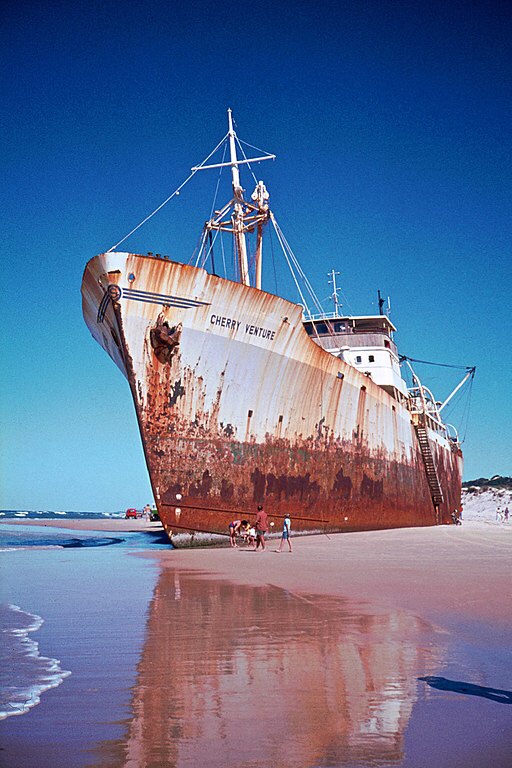
I also played field hockey at Gympie, the competition was tiny, basically rock up on a Friday night and organise a scratch match with whoever else was around. But everyone was so friendly and I became really good friends with the lady who ran the junior program Sally Parker. You also experience new things, including Rainbow Beach on the coast near Gympie, which is called that because of the rainbow coloured sands. There was also the Cherry Venture nearby, which was a massive freighter that had been grounded there for decades slowly rusting away. That’s cool shit.

Now that’s cool shit by Grumpyoldman1959 under CC1

I was the first Lean Manufacturing specialist Boeing had employed in Australia, which is why they sent me to their factory in Seattle. I then came back to Australia and delivered training courses and facilitated Lean Manufacturing workshops at all the Boeing sites around Australia, where we looked after the mighty F111 fighter jet, the C17 Cargo Plane and so much more. It was such a cool job.

Dump and burn baby! With the F111 at Amberley Air Base by Andrew Napier under CC2

But even though the Lean Manufacturing job was so cool, I also kept an eye out for other job opportunities within Boeing Australia. My next job was as Quality Manager in the Integrated Logistics Support Capability. I wouldn’t call it an interesting job, I’m sure many people wondered why I’d left such a cool job to do this one. But I really wanted to work there because there was such a good manager in charge, the wonderful Jack White. I really wanted to work for him and I’m so glad I did, because it set off a chain of events that landed my dream job. It doesn’t matter which road you go down and who knows what cool stuff you’ll see on the way.

The wonderful Jack White

Not long after I started as Quality Manager in the Integrated Logistics Support Capability, one of our customers on a $500M program started jumping up and down that we weren’t implementing Reliability Engineering properly on his program. We didn’t have a Reliability Engineer at the time, or previously. I’d never even heard about Reliability Engineering. This was a good opportunity to throw myself in the deep end and prove my worth. So I taught myself all about Reliability Engineering. I delved deeply into the program. I gathered evidence that we were implementing Reliability Engineering. I presented that back to the customer and everyone was happy.

Reliability Engineering by the Wiley Asia Blog under CC2

This one was scary. It was a big program and it had management’s attention. Which could be a blessing or a curse, depending on how I performed. But I wasn’t scared to jump into the unknown here, because it was partially related to my Quality Assurance role. I was effectively auditing the program and gathering evidence that we were implementing Reliability Engineering. There was knowledge of Reliability Engineering in the team and I was also provided access to an external consultant who was a Reliability Engineering expert. All of that made it much easier to understand what evidence I should be collecting.

Because I’d done so well at that job, I got the opportunity of a lifetime. Boeing Australia created an Advanced Systems Team and I was one of the first members. We were asked to look widely across the global Boeing company and identify products and services we delivered elsewhere, that could be applied to the Australian market and then develop business strategies to bring them here. That’s cool shit. I wouldn’t have got that opportunity if I hadn’t taken the job as Quality Manager in the Integrated Logistics Support Capability, because I wouldn’t have gotten the opportunity to prove myself with Reliability Engineering. It doesn’t matter which road you go down and who knows what cool stuff you’ll see on the way.

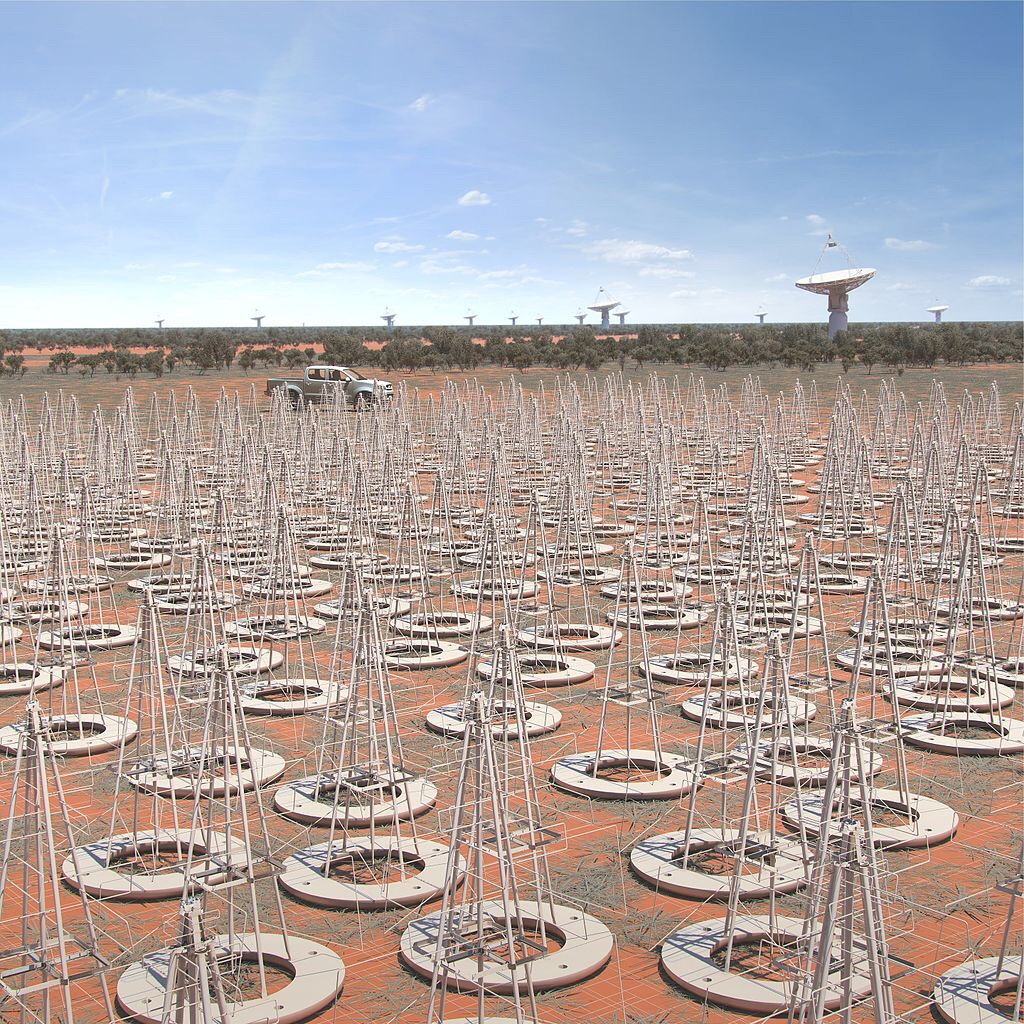
I got to work on cool projects like this on, the Square Kilometre Array 😃 by SKA Organisation under CC3

I was then offered a redundancy from Boeing and found a job with KPMG, who are one of the Big Four in Management Consulting. Whilst I’d heard about Management Consulting, I’d never considered a career as a management consultant before I’d applied for a position as one, but it doesn’t matter which road you go down and who knows what cool stuff you’ll see along the way, so I climbed aboard. I’d learnt all about process improvement at Boeing and that’s a key capability used in Management Consulting, so that gave me confidence that I could do the job. I’d also developed a good knowledge of the Department of Defence through Boeing; and KPMGs major customer were the Department of Defence. So that gave me more confidence.

KPMG by Solvency Ii wire under CC2

Management Consulting is such a great place to extend your capabilities and I would recommend it to anyone as a way to get out into the world and develop new capabilities, networks and friends. They always have several jobs running needing different skill sets, so you learn new skills quickly and you get to work with some of the best in the business. But I also got rewarded when I walked into the induction program and met my wife! It doesn’t matter which road you go down and who knows what cool stuff you’ll see on the way.

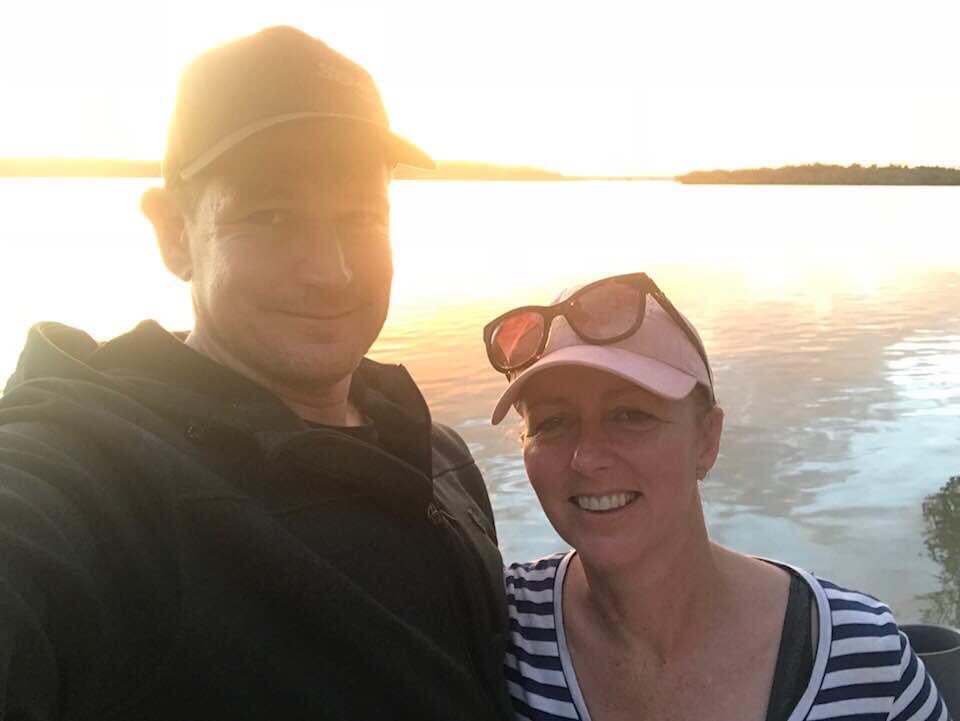
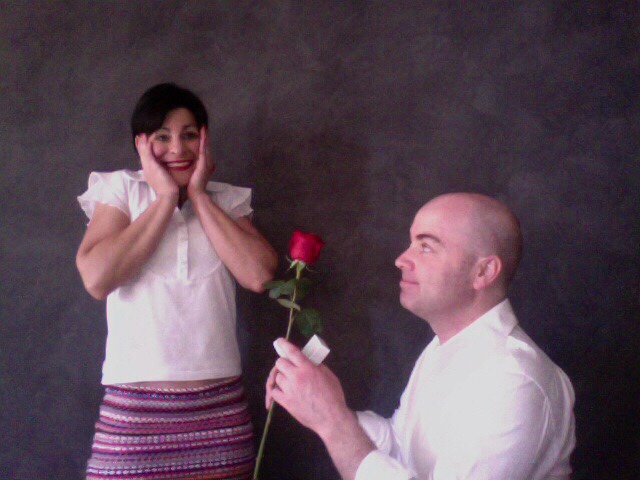
Yes 😃 with Amanda Bisa

Another great example is my job straight after Management Consulting, it was as a Competitor Intelligence and Position to Win Analyst with Lockheed Martin. I didn’t even know that job category existed, but it looked like an interesting role and I figured that the market analysis I had learnt in the Advanced Systems team at Boeing would be directly applicable, so I thought I’d have a crack at it. It really was a fascinating role and I learned so much about how markets work in a competitive environment. The stakeholder engagement skills needed for the role were also much harder than any other job I’d done, so I extended my experience even deeper. My old boss from Boeing, Rod Drury had also joined Lockheed Martin. I then got rewarded when he tapped me on the shoulder and asked me to join him as Business Development and Strategy Manager in the Space Industry! I wouldn’t have got that job if I hadn’t jumped in and been working at Lockheed Martin. It doesn’t matter which road you go down and who knows what cool stuff you’ll see on the way.

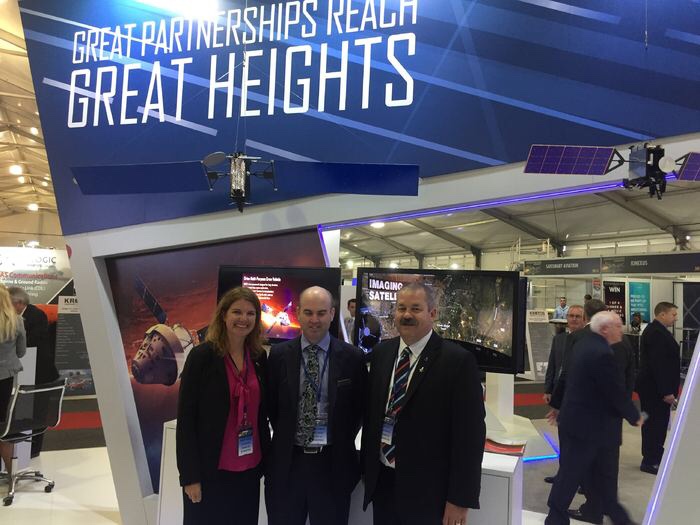
Rod’s leadership did take me to great heights

After my cancer journey is another great example. I returned to work as Business Development and Strategy Manager for the Lockheed Martin Space Systems Company for my mate Rod. The Australian Space Agency had been established while I was in hospital and the Australian government had invested significant funding to aid development of the industry. All of that got me so excited to get back to work and help grow the next exciting industry for Australia. Unfortunately the acquired brain injury I sustained during my cancer journey, meant I was unable to work full time, or do the wide thinking needed to develop business strategies. So my boss asked me to resign. I could have fought for that cool job, but I moved on quickly and quietly. I then got offered a job at a Computer Company. I had actively avoided computer projects and jobs my entire career, because in every project I’d seen, there was never a good integration between the technology and work environment. But it doesn’t matter which road you go down and who knows what cool stuff you’ll see on the way, so I climbed aboard. Once I headed down that road, I found a computer company that worked so closely with the users and their business environment, that they uncovered latent needs and delivered solutions better than anyone expected. They also have outstanding flexible working practices that are making it so much easier to deal with my acquired brain injury. I honestly couldn’t be happier. It doesn’t matter which road you go down and who knows what cool stuff you’ll see on the way.

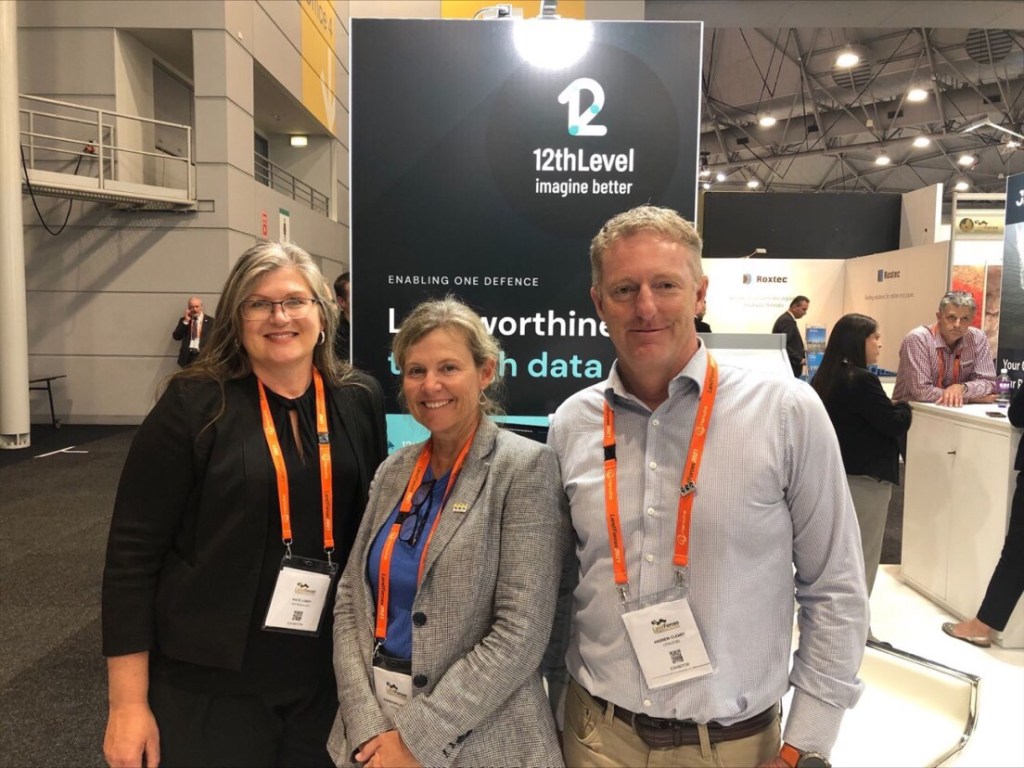
My awesome new boss at 12thLevel, Andrew Cleary

So please remember that every job is experience, even the jobs that you’re not sure about, or don’t enjoy. Have faith, that even though you don’t know where the road will take you, that you never know where opportunities will arise, or what you will learn along the way. But you need to be ready to jump in when opportunities arise. Don’t be scared of jumping into the unknown.

Transformation versus Improvement

Throughout my career I’ve worked in both transformation and improvement. They are the same and different all at the same time. At a basic level, improvement looks at exisiting processes and structures, to identity and implement incremental changes, to improve how it works. Transformation fundamentally restructures processes and how a business works.

I learnt the fundamentals of transformation versus improvement early in my life. My father was a boiler maker welder for the largest exporter of onions in the Southern Hemisphere. An amazing little company down in Tasmania called Vecon. I spent a lot of time going to work with my dad, where he showed me how to improve all parts of the onion harvesting and processing value chain. For example, I helped him modify the bagging machine, so they didn’t damage the onions as much when they were bagged. But he also inspired me with his transformation, for example, he once took a tractor and transformed it into a self propelled onion harvester.

A good example of improvement versus transformation is early in my career when I was working for a company that converted Chevrolet Corvettes to right hand drive, so they could be driven on the road in Australia.

It was a fairly large facility with up to half a dozen vehicles being converted at any one time. The boss had me focused on improvement, by helping the technicians convert cars quicker, easier, and cheaper whilst ensuring a quality job. This largely consisted of designing parts that could be mass produced by companies with the right equipment, instead of the technicians hand building each part as they converted.

However I had just graduated from university and my favourite subject had been Lean Manufacturing. This gave me the vision of fundamentally transforming their production, using Lean Manufacturing to create an assembly line. Their current production method was to drive the car onto a hoist; jack it up; pull it apart; and reassemble. Technicians were constantly traipsing around the property gathering tools and parts to do this. From my Lean Manufacturing experience, I could see the efficiency gains by introducing a production line, where tools and parts were placed strategically, so that the technicians had exactly what they needed, when they needed it.

A production line would also introduce machinery that would perform the conversions more efficiently and effectively. This would also transform the type of technician required, which would be of huge benefit. There are no training courses/diplomas/trade certificates in how to convert care to right hand drive. The technicians learnt the skills on the job, which takes a long time. When the company sought new technicians it was rare to find one with experience because the steering conversion industry is small in Australia.

Doing that would transform the way steering conversions were done. Unfortunately at that stage of my career I had not developed enough experience to efficiently design the production line, or the stakeholder engagement skills to sell the benefits of doing it. However, the work I was doing would have been the first step in creating a production line, so the improvements I was doing could have led to transformation.

I’ve also worked in several roles in Strategy and Business Development. I was in an improvement role when I worked as Competitor Intelligence Analyst for Lockheed Martin. In this role I supported Proposal and Bid teams, to improve their bids and proposals, by analysing and developing our competitors strategies. This allowed the teams to improve their bids and proposals to be more competitive. But it also led to transformation when I found that competitors had a more competitive solution i.e. a better technology. The Proposal team then had to transform their proposal to be able to compete. They didn’t necessarily transform their technology, they could for example transform their business model to offset the competitors technology advantage and be more competitive.

I was in a Transformation role when Boeing created an Advanced Systems team and we were asked to look across the wider Boeing company, to identify products and services we delivered elsewhere that could be applied to the Australian market. We then developed strategies to introduce these products and services into Australia and transform the Boeing Australia business. I found a Boeing subsidiary in America, that produced the most efficient Concentrator Photovoltaic (CPV) solar power cells in the world. They were used for space based applications such as powering satellites, but they had developed a land based power plant. They were unable to gain traction in America because Boeing is not a power company and the electricity supply market is very different from the aerospace market. However we thought that it may be more attractive if we proposed to build the new power business in Australia. It would significantly increase the earnings of the Australian business, which would generate greater management support, across different business areas.

Facilitating Creative and Critical Thinking, to help people develop innovative solutions to their problems, that will be readily accepted and implemented efficiently

I had a delightful mentor ask me recently what my Career Niche Value Statement was. A Career Niche Value Statement is basically your purpose statement and what is your why, behind what you do, which is ultimately the value that you deliver. I initially had no idea, because I’d never really thought about it. But I really should have, because if you’re not adding value to a business, you shouldn’t be there. So I set out to find my Niche Value Statement by writing about it. I started out with exploring ‘Facilitating Critical Thinking’ as my Niche Value Statement, as I’d identified this as a core skill whilst I wrote my autobiography. However during my writing journey I discovered that my Niche Value Statement is actually much broader than facilitating critical thinking. I had never critically thought about what I did, that delivered value. Don’t think the irony of those statements isn’t lost on me. LOL!

So let’s talk about my Niche Value Statement. Throughout my career I’ve facilitated critical and creative thinking to help people develop innovative solutions to their problems. I got lucky and learnt how to facilitate critical and creative thinking early in my career, during my time as a Lean Manufacturing facilitator at Boeing, I then went on to apply this problem solving approach in many different jobs including, process improvement, quality management, reliability engineering, competitor intelligence, and strategy development; across the defence, aerospace, space, and ICT industries. With this problem solving approach I have helped people design innovative solutions for; more efficient manufacturing lines and business processes; more competitive bids and proposals; more reliable and efficient products; and successful business expansion strategies.

The need for creative and critical thinking, stems from the fact that we all have a way of thinking and living our life, based on our current beliefs, values and capabilities. It’s important that we understand what these are, and follow them, because it helps us to lead happy and fulfilling lives. But our world is constantly changing and if we want to continue living our best lives, then we need to change with it, because if don’t, it will leave us behind. We are all hit with situations, where the way we live our lives causes problems and we have to change how we live our lives. Therefore, if we critically think about our current situation and identify what’s not working for us, this then allows us to think creatively about how we can improve aspects of our lives that are no longer working for us. By doing this we will be rewarded by continuing to lead a happy and fulfilling life. Therefore you should always be open to change.

This happened to me after my cancer journey. The cognitive impairment I suffered during my journey resulted in me being unable to do the wide thinking needed to develop strategies in the space industry. I deeply loved developing business strategies, especially in the space industry. But my world had changed and by sitting down and critically thinking about how it had changed, it helped me to accept that I also had to change. So I launched into some creative thinking and sought advice from people I respected, who introduced some new thinking, that I should reach back into my experience and consider jobs that I knew really well, that didn’t need the wide thinking skills that I currently lacked, such as Quality Management and Training. This process reminded me that I hadn’t walked away from these jobs because I didn’t enjoy doing them. I had simply pursued new opportunities. This gave me the confidence to pursue them, and resulted in me still live a happy and fulfilling life.

This applies equally in the business world. Businesses operate in specific ways, as it may have been very successful for them in the past. But the world changes and what worked for them previously, may no longer work in the new world. So they have to change as well.

To enable change we need people to accept new ideas, theories, ways of life. Change is hard, but change is easier if you have someone to facilitate you through a problem solving workshop, that facilitates critical and creative thinking for you, which enables you to accept new ideas, theories and ways of life to develop innovative solutions to your issues. Because you know your issues best, and you’re best placed to determine if new solutions will work.

So when I’m facilitating critical and creative thinking, I don’t stand up in front of a workshop and tell people how to fix their problems, I facilitate critical thinking about their current situation and issues that need solutions, so that everyone understands it well. I then facilitate creative thinking so they can think outside the box and develop innovative solutions to their own problems. I then help them critically examine which solutions would work best for them. This allows people to embrace their own solutions, and drive their implementation and success, whereas they’re more likely to reject solutions forced upon. So this is a key strategy for successful change management.

I learnt the key foundational skills to be a successful problem solving facilitator, as a child. I was so lucky that my parents thought their children were the future. Through critical thinking they taught me to fully understand what my beliefs, values, and capabilities were. This gave me a sense of pride and the humility to accept who I was at that moment, to not have self inflated views of myself. If I had an overinflated view of my capabilities, I wasn’t going to put effort into improving them. They then let me lead the way, so that when I identified that my beliefs values and capabilities needed to change, they facilitated the creative thinking that helped me set goals for improvement. They then facilitated critical thinking for me to identify impediments to that improvement, then facilitated creative thinking for me to develop strategies to work around those impediments to reach my goals.

All of these things my parents did for me, helped established a strong foundation for me to facilitate critical and creative thinking that helped other people develop innovative solutions to their problems. Please let me explain how.

Effective problem solving is a multi phased process, that requires you to facilitate both creative and critical thinking. Phase 1 starts by taking the time to understand the current environment, by researching and gathering facts and data about a situation, to explore in detail what problems people are trying to solve. For example, in Lean Manufacturing I’d gather; statistics about how long a process takes; customer feedback; errors that are occurring; etc. In Competitor Intelligence, I’d gather; evidence about competitors capabilities; market trends; the customers key decision criteria; etc.

I then present this data and analysis in a workshop setting and ask clarifying questions to ensure you develop a good understanding of people’s environment and issues they are experiencing. Some examples of clarifying questions include. “Did I hear you correctly when you said….?”, or “What type of criteria did you use to assess that?”. This also develops trust between the facilitator and the workshop participants, because you work hard to understand them. Then ask probing questions to get to the root cause of issues being experienced. Probing questions are typically open ended and designed to promote deeper thinking about a topic. Some examples include. “What is the situations pros and cons?”, or “what do you think is the root of the problem?”. The trustworthy environment that has been developed; then fosters a good understanding of the environment and issues that need attention through open and honest communications; which leads to better solutions more efficiently in later phases. This phase facilitates critical thinking about their current situation, to explore their environment and their issues that need solving in detail. Because you can’t solve a problem until you succinctly understand it.

In Phase 2, I facilitate creative thinking, to help them create solutions to their problems. Creative thinking is the ability to think about something in a new way. To think outside the norms you are used to. To challenge your exisiting assumptions. I do this by inviting workshop attendees from other areas of a business, and highly respected guest speakers, to introduce new ideas and ways of thinking. You can also use global standards or best practice to challenge people to improve. During the workshop I’ll also run brainstorming sessions with post it notes, by focusing on each specific problem that needs solving and asking for peoples ideas. You then group together ideas into common solution themes. Each of these solution themes is then critically examined, whilst asking probing questions to determine its value to solving the initial set of issues, and further refining a solution. Then rank the solutions using critical thinking to assess the best solution.

Successful change management is derived during these problem solving workshops, by presenting facts and data about a process, which helps people have the humility to accept their current level of performance. This also gives them the desire to improve it, so when highly respected guest speakers introduce new ideas they’re more likely to embrace them, because people are more likely to accept new ideas and ways of doing things, if they respect the person who is suggesting it. Asking probing questions then furthers this desire to improve, whilst generating new ideas.

Therefore, my Niche Value Statement is “facilitating critical and creative thinking, to help people design innovative solutions to their problems, that will be readily accepted and implemented efficiently”

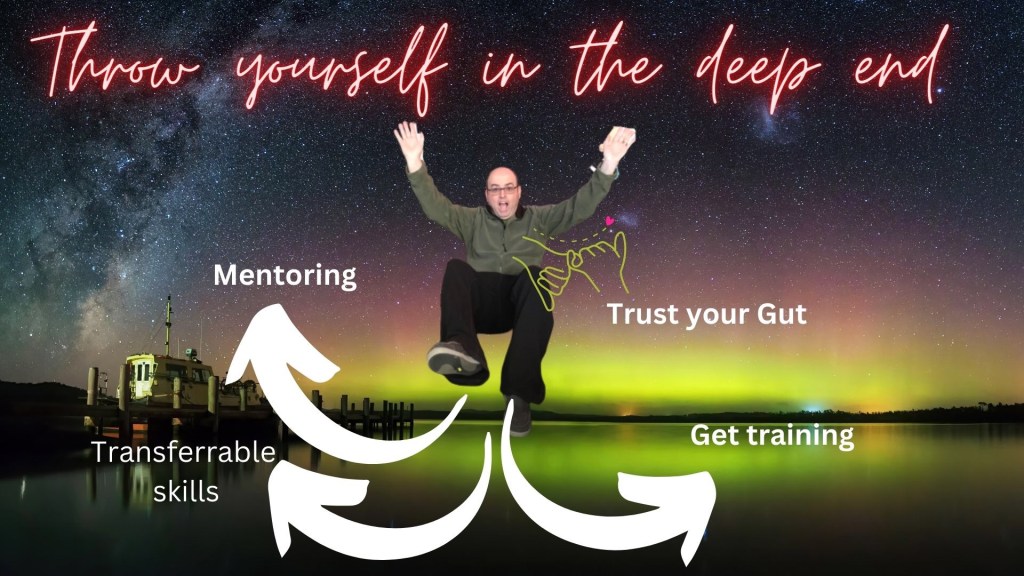
Jumping into the unknown

Photo by my nephew Isaak Martin Cole

Throughout my career I’ve jumped into the unknown, i.e. jobs I hadn’t done before, and even jobs I’d never heard of before. It’s scary and rewarding all at the same time. It’s absolutely a key foundation to how I built my successful career. By jumping into the unknown, you learn new skills quickly, which gives you confidence, helps you stand out, and shows your employers that you’re ready for any challenge.

It was enabled during my childhood, where my parents taught me the key skills needed to try new things, even if they are a little scary and they fostered a real thirst for knowledge. This thirst for knowledge enabled me to be excited about jumping into the unknown. It enabled me to dive into a subject; quickly understand it; then present it back to people unfamiliar with the subject. I learnt so many exciting new things. It was still scary, but that just creates suspense. Because it doesn’t matter which road you go down and who knows what cool shit you’ll see on the way.

My parents fostered a thirst for knowledge early in my life by delving into all sorts of subjects and explaining how things work, and why they work. From how to harvest and process onions, to why there are spirits in the world and everything in between. They also encouraged me to read and I became an avid reader, delving into all sorts of interesting topics at a very young age, which drove my curiosity.

My parents also encouraged me to try new things even if they were dangerous, but they also taught me to not discount the dangers, that I needed to understand how to do things safely. Such as learning to drive my dads Ute when we had just started high school. They taught us how to do this in the onion paddocks, which was a safe place to start. Or when they let me learn how to sail in Bass Strait, one of the roughest waterways in the world, when I couldn’t swim. But they taught me the importance of wearing flotation devices and ensuring a safety boat was in hand if I got into trouble. Or teaching us how to shoot guns when we were high school age, whilst also teaching us why guns were dangerous and how to use them safely. Sure that’s all dangerous, but if you’re cautious, if you learn well and understand what risks you can take, you’ll get through it.

Trusting my gut also helped me to jump into the unknown. My mother taught me to trust my gut. Whenever we would ask for advice, she would say, “what does your gut say?” So I started listening to my gut and it led me to so many amazing places. This helped me, to be not scared of the unknown, because I trusted that when my gut told me that it would be ok, it would work out well in the end.

Another key skill I used, was to understand which core capabilities I possessed, that could be transferred across markets and capabilities. These included, facilitating critical thinking, understanding how to interpret requirements such as quality standards, process mapping, bid development, change management, and process improvement. I would explore how each of these skills could be used in a new job, and that would give me confidence that I could do it. I learnt this lesson early on as well, from my Dads boss, Peter Gilham.

Peter started his business, Vecon, by identifying a gap in the European Onion Market. Because our seasons are different, there was a shortage of fresh onions on the European Market, just when ours were being harvested and fresh. He was one of the first people to identify this and it enabled him to become the largest onion exporter in the Southern Hemisphere. He then diversified into walnuts using exactly the same market entry strategy. At the time only 3% of walnut production was in the Southern Hemisphere. This enabled him to became the largest walnut exporter in the Southern Hemisphere. But he was also cautious that growing and processing onions, is very different to growing and harvesting walnuts, but the fundamentals are the same. Having that basic understanding gave them the confidence to jump into a different vegetable, they then travelled overseas to see best practice, so they could implement it back in Tasmania.

My best example of jumping into the unknown was when I was working for Boeing. A customer on a $500 million dollar program was concerned that we weren’t implementing Reliability, Availability and Maintainability (RAM) Engineering into the program correctly. We didn’t have a RAM specialist at the time, or previously. I’d never even heard about RAM Engineering before. So I asked a few people about it, and did some research. What I found, was that RAM is unbelievably complex and requires incredibly detailed mathematics. But I had loved maths back in my school and university days, so my thirst for knowledge took off and I honestly couldn’t stop myself from diving in further. I was also utilising the skills I had learnt in Quality Management, as the task I was assigned, was basically auditing the program for RAM implementation. So that gave me confidence. But I also acknowledged that it was scary, as it was such a big program for Boeing Australia, with our major customer, and we couldn’t afford to lose confidence with them. This had top managements attention, and it’s focus would be on my ability to prove that we were implementing RAM effectively.

So yeah, it was scary, but I also respected the importance of us demonstrating our confidence to our major customer, so I jumped in and learnt all about it, and I’m so glad I did, because it taught me so much about an extremely complex capability. I wouldn’t have learnt about it any other way. Even better; I jumped into the program; gathered evidence that RAM was being implemented; presented that back to the customer; and the customer was happy. Now that’s cool shit.

Because I’d done so well jumping into RAM and proving that my thirst for knowledge could be applied to many different things, I then got rewarded with the opportunity of a lifetime. Boeing created an Advanced Systems team that was asked to look widely across the global Boeing company to identify products, capabilities and services we delivered elsewhere, that could be applied to the Australian market. It was here that my thirst for knowledge took off and I delved into so many different areas. It was so much fun. I was on the cusp of launching Boeing’s global ground based solar power business in Australia. Unfortunately Boeing’s top management back in Chicago weren’t a fan of ground based solar power and with a stroke of the pen it was gone. Oh well, I’d had my fun!

Another great opportunity was with KPMG, who are one of the Big Four in Management Consulting. Whilst I’d heard about Management Consulting, I’d never considered a career as a management consultant before I’d applied for a position as one, but management consulting had a good reputation, as the place smart people went. So I thought I’d give it a go. I’d learnt all about process improvement at Boeing and that’s a key capability used in Management Consulting, so that gave me confidence that I could do the job. I’d also developed a good knowledge of the Department of Defence through Boeing; and KPMGs major customer were the Department of Defence. So that gave me more confidence.

Management Consulting is such a great place to extend your capabilities and I would recommend it to anyone as a way to get out into the world and develop new capabilities, networks and friends. They always have several jobs running needing different skill sets, so you learn new skills quickly and you get to work with some of the best in the business. But I also got rewarded when I walked into the office and met my wife!

Another great example is my job straight after Management Consulting, it was as a Competitor Intelligence and Position to Win Analyst with Lockheed Martin. Once again I didn’t even know that job category existed, but it looked like an interesting role and I figured that the market analysis I had learnt in the Advanced Systems team at Boeing would be directly applicable, so I thought I’d have a crack at it. It really was a fascinating role and I learned so much about how markets work in a competitive environment. The stakeholder engagement skills needed for the role were also much harder than any other job I’d done, so I extended my experience even deeper. My old boss from Boeing had also joined Lockheed Martin. I then got rewarded when he tapped me on the shoulder and asked me to join him in the Space Industry! I wouldn’t have got that job if I hadn’t jumped in and been working at Lockheed Martin.

But it’s not just about jumping into new capabilities and markets. I’ve also not been afraid to move into new towns, cities, and states. I learnt this lesson early on when I was launching my career. Straight after high school, my goal was to study Mechanical Engineering. But to do that, I had to move to Hobart which is a three hour drive, which scared me. So I chose to study Civili Engineering at a TAFE college nearby. But as I worked my way through the first year I realised Civil Engineering wasn’t my thing. So I sucked it up and moved to Hobart. Whilst moving to Hobart did scare me, I settled in quickly and easily and I really loved it. It went so well that it gave me the confidence to move up the other end of the country to Brisbane, which led me to work with Boeing and it was Boeing who really launched my career. To be fair, my Uncle Vince lived in Hobart and my mate Pat did move up to Brisbane at the same time as me, so that made it much easier to move to a different city. But I’ve also moved to places where I didn’t know a single soul. Gympie in regional Queensland and also to Canberra. But it didn’t take me long to make friends in any place I’ve lived. You become friends with the people you work with, the people you play sport with and the people you live next door to. You also experience and see new things, like Rainbow Beach near Gympie. It has rainbow coloured sands, but there was also a huge Cargo ship that had been sitting on the beach rusting away for 30 years. I never would have seen these things if I hadn’t lived in Gympie. It doesn’t matter which road you go down and who knows what cool shit you’ll see along the way.

Easily the scariest time I’ve jumped into the unknown, was when I returned to work after my cancer journey, as a Strategy and Business Development Manager in the Space Industry for Lockheed Martin. I was a changed man in all sorts of different ways. My nerve prone feet meant that I was unable to attend trade shows which was a big part of my job. Travel was too difficult due to the fatigue issues I was suffering. My cognitive impairment meant that it was unknown if I could even do the same job again, and as it turns out I couldn’t. This was the first time that I had failed when I jumped into the unknown. This then threw me into an even deeper unknown. I didn’t even know what type of job I could do!

But I didn’t panic, I delved back into my past and explored jobs that I’d previously done, but walked away from. Jobs that I knew really well such as Quality Management and Training. I also found that one of the things that really helped me out here, was just how many times I’d jumped into the unknown previously, because it helped me create a diverse career and it was that diverse career that attracted the employers who I was interviewing with. I also wasn’t scared to jump into the unknown again, even though I’d just failed at jumping into the unknown. I then went to work for an ICT company. I’d never worked in ICT before, I didn’t want to work in ICT before, because every ICT company I’d ever worked alongside, used to work away writing computer programs, then hand it over and say “here it is” then walk away. They never put any effort into creating a software product that people could easily use, and they never followed through, to help people use them. But I threw myself into the unknown once more. Because it doesn’t matter which road you go down and who knows what cool shit you’ll see along the way. What I found was an ICT company that worked so closely with users throughout the design and development process, that we produce intuitive software, that solves more problems than users originally anticipated, because we uncover latent needs along the way. I honestly couldn’t be happier working in ICT. I didn’t expect that!

So whilst it is scary jumping into the unknown, don’t let that stop you from doing it; be aware of the risks; explore which of your skills are applicable; take it slowly and cautiously; enjoy it, because you’ll learn so much, gain confidence and status.